
Austria: from 18-19 down to the final
Kadlec and Leybourne, world champions from Guildford in 2024, beat Hui and Lowe of the United States 21-19, 12-21, 21-19. In the third game the Americans led 18-19, two points from the final. Austria won the next three points, 19-19, 20-19, 21-19, and is in the final again.
Jakub's verdict on the four matches, written down as it happened: the best of the round, and an unbelievable comeback in game three.
Germany: one match point from going home
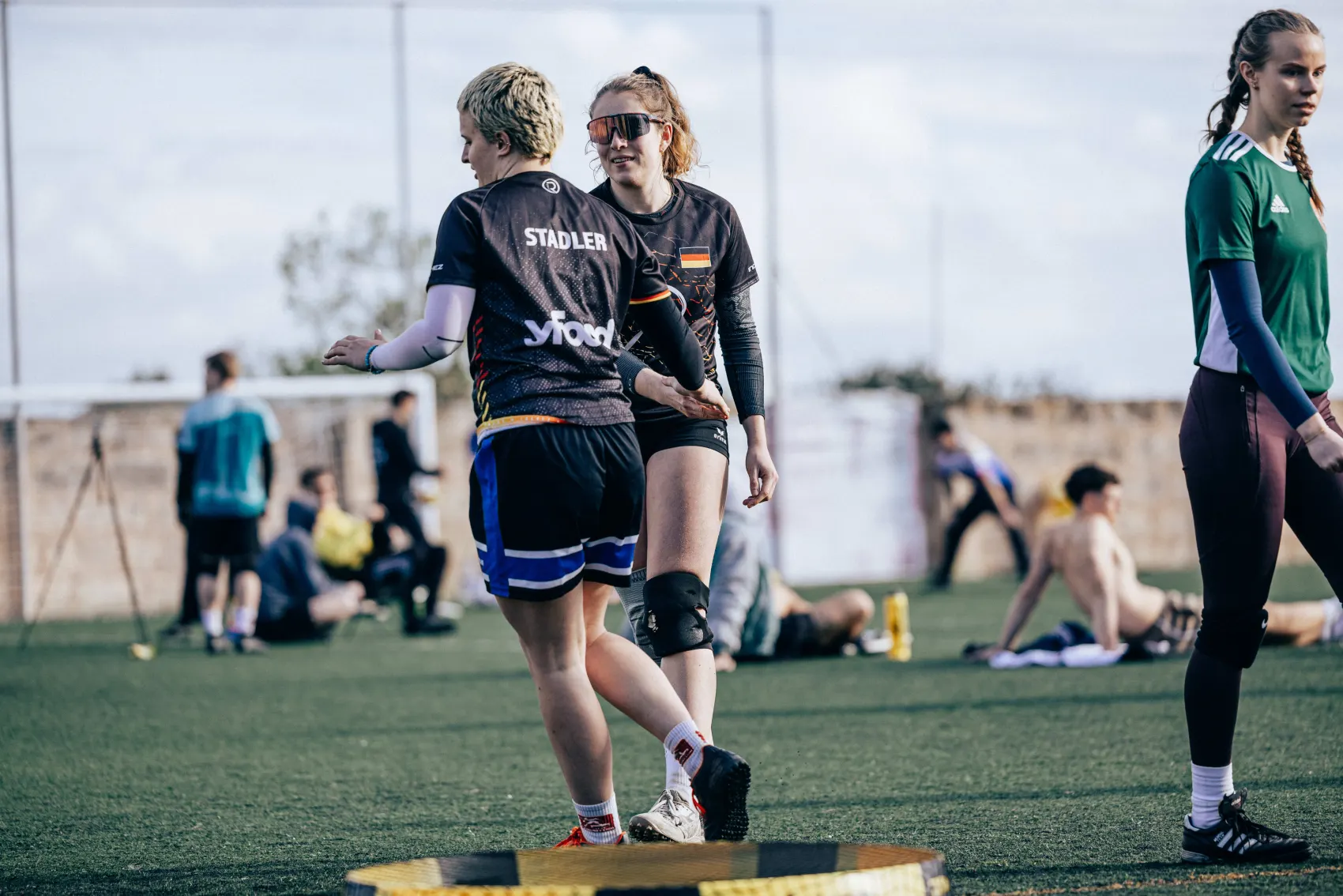
Seiffarth and Siemer beat Bazzani and Borsotti of Italy 19-21, 23-21, 21-19. In the second game Germany faced match point. An Italian ball landed about ten centimetres out, Italy then made an unforced error, and Germany took the second game and then the third.
Ten centimetres decided who played for the title on Friday. Everything after that happened only because that ball was out.
Jakub's view, and it is a view, not a table: Siemer is the best player in the world right now. He has the record to argue with: he is the reigning individual world champion, from 2024, won with a different partner.
The favourites did what favourites do
The other men's semi-final is the one the model got right. Nelson and Rose beat the second German pair, Bichler and Nerad, 25-24, 11-21, 21-12, and Nelson and Rose were on top of the forecast this blog published on 1 September: first in the field, 63.1 percent for gold, Nelson with the highest individual rating in the whole draw at 2,045 and Rose fourth at 1,867. No other pair had two players in the top four.
That forecast gave the three European semi-finalists 7.8 percent of the gold between them, and Seiffarth and Siemer 2.6 percent of it. They are the pair standing between the Americans and the title.
In the fourth semi-final Amsler and Kunzelmann of Switzerland beat Pernigo and Zanella of Italy 21-19, 21-10, the only one of the four decided in two games.
Roundnet Germany streamed the German-Italian semi-final. Around 500 people were watching it, counter reading rather than platform statistic.
How the finals were set
The men's final is set: Seiffarth and Siemer against Nelson and Rose. Germany against the favourite, one match point after almost going out.
The women's final is set. Kadlec and Leybourne against Amsler and Kunzelmann, Austria against Switzerland: the reigning champions against the pair that put out Pernigo and Zanella of Italy. Switzerland won the mixed title at the last championship in Guildford.
Corrected on 27 September 2026: an earlier version of this article described the serves that decided these matches. We could not verify those details against any record, so they have been removed. A player's name was also misspelled; it is Leybourne.